DUST THOU ART by Ted Mills

I first read this article by Ted Mills (Aka RoseDoc) in the beautiful and very informative American Rose Society magazine,  American Rose.

Dust Thou Art…

“By the sweat of your brow you will eat your food until you return to the ground, since from it you were taken; for dust you are and to dust you will return.” (Genesis 3:19)

This scripture mandates the importance of soil. Biblical reference further emphasizes its value by stating that mankind will return to dust.

As RoseDoc pondered this biblical truth, it convinced him of the importance of soil. It behooves the rosarian who wants to raise award-winning roses to establish a planting site.It should provide the nutrients necessary for good growth. There was a time when Garden-of-Eden-type soil was in abundance. It was the perfect soil. Today, the earth has numerous varieties of soil. Some is sandy, while other sites have extensive amounts of clay. Some have good drainage, while other gardens have surplus moisture that stands indefinitely. Some is pure chert with severe nutrient depletion. Rosarians need to know the makeup of their rosebed soil. Only a soil test will reveal the status of soil quality.

Why is RoseDoc so interested in soil? He considers it the essence of life, since all creatures started in a form of soil. It is our Creator’s word listed above that validates this statement. Birds in the air, worms in the soil, beetles in the grass and all animals owe their being to soil. Even humans experience that same beginning.

In rose growing there is a definite need to pay attention to the soil quality. No longer do we have an abundance of fertility. This is especially true in urban areas where commercial growth has taken its toll. Soil amending is essential. The rosarian must know what is best to provide its improvement. Soil analysis is the first step. Agricultural agents and some garden centers provide this service. Once you acquire this information, it is time to put action into the project.

There was a time when ARS did not highlight the inclusion of organics in feeding roses. In fact, it was over 100 years of existence that the first organic product was endorsed.  Chemical fertilizers alone enjoyed top billing in the feeding program. Not so today.  Rosarians began to realize the importance of organic feeding for their roses. The value of adding humus to rosebeds was advanced. It was a common occurrence for compost-minded exhibitors to place winning entries on the head tables.  Organics gave the blooms added luster that enhanced their chances of winning. RoseDoc’s hero, Dean Reynolds Hole, the famed English patriarch of roses, strongly supported the use of organics. His philosophy spoke of providing ample “dunging” to rosebeds. It was he who kept rose growing on the “front burner” of hobbies in England. To him, the practice of exhibiting in rose shows commanded top interest.

RoseDoc well remembers his initial struggle with soil improvement. During the Great Depression of the 1930s, it behooved rural farmers to accelerate their production of vegetables. RoseDoc faced growing them in coal-dust-infused soil.  Living near a coal tipple is not the best location, since an abundance of sulfur proved harmful. However, with extra effort he was mildly successful. It proved to be a “baptism” in soil amending in difficult conditions. However, since that time, revitalizing soil is easier since nutritious components are readily available for use.

Once the rosarian decides to adopt rose growing as a hobby, it is time to put action into his decision. Remember that the home of the rose regulates its quality. Does the soil have the proper pH? Is there an abundance of organic material in the bed? Is drainage a problem? Is sufficient sunlight available? Is it planted near invading tree roots? These are but a few questions to be answered. Once these are satisfied, the rosarian is well on the way to produce good roses.

To ensure the continuance of the hobby it is well to join a local rose society. There you can find the most helpful information. Association with skilled rosarians can reap
many benefits. One virtue of rosarians is the fact they unselfishly share rose culture with
fellow members. That, in itself, is a big plus that is not always provided by other hobby groups. Even in rose shows, participating rosarians share helpful knowledge to their
competing exhibitors.

Understanding the importance of soil is the proper route to growing award-winning roses.

It is the initial step to being successful in the hobby. Don’t skimp in applying amendments to rosebeds. Garden centers have the necessary products to ensure successful growing. Visit them regularly and view the many products now available. Couple these visits with a good composting operation at home.

RoseDoc is so cognizant of soil’s worth that he considers it borders sacrilege to call it “dirt.” Leave that terminology to unkind gossip.

“Dust you are and to dust you will return.” That is a sobering truth. It certainly lets every person know the importance of soil, especially rosarians.

Reprinted by permission of the author Ted Mills (Master Rosarian and Judge) and The American Rose Society.

Bloom Thyme Friday: The Good. The Bad. The Ugly. Part 2.

The gorgeous Flamenco rose has required very little water / from the Biltmore Collection

Today we start 9 weeks of drought… as you know my garden is very large and I have had to limit watering to my roses and tomatoes and alternating trees and shrubs that are closest to our living area.

As I write this I am in the garden looking up at a simply gorgeous summer sky… not a cloud in site! Even in times of drought, God does amazing things… with people and with plants.

There is always an up side, I read that it looks like the US will set a record in the month of July for the fewest tornadoes on record. After the horrible storms of last summer (remember Joplin, MO), that is sure welcome.

And, as far as the roses are concerned, they are usually covered in Japanese Beetles at this time of year and so far we have seen very few. In their place are beautiful blooms without bug bites! That is sure welcome!

Zinnias can take the heat…
Roses get watered once a week and still keep going!
Tomatoes get water a couple times each week….
Hydrangeas in the side yard…
Sunny Knockouts and wave petunias can definitely take the heat!
Black-eyed Susans can take the heat.
More Zinnias with Phlox that is also beating the heat very well.
First bloom of Tropicana … rescued from sale table.
Gold Medal Grandiflora….
Picture worth a thousand words…

Wordless Wednesday: Bloomin’ in the Heat

Bill Warriner Floribunda
Julia Child
Flamenco / Biltmore Collection
Sunny Knockout


Janice Kellogg

Bloom Thyme Friday: Let There Be Peace

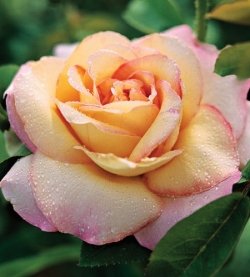
The Peace Rose is one of the most famous and beloved roses of all time. I had this rose once upon a time, in fact … it is one of the first roses my son gave to me– which made it very special. However, during one of our particularly harsh Indiana winters, we lost it.

SUMMER SALE…
This week I saw an extremely healthy Peace Rose on the Lowes sale table. I thought it is time I had a Peace Rose again.

THE DETAILS…

  • Yellow blend Hybrid Tea
  • Bred by Francis Meilland (France, 1935)
  • Introduced in United States by Conard-Pyle (Star Roses) in 1945 as ‘Peace’
  • Strong fragrance
  • Very large, full (26-40 petals), cupped, high-centered bloom form
  • Blooms in flushes throughout the season.
  • Height of 4′ to 6½’ (120 to 200 cm)
  • Width of up to 3′ (up to 90 cm)
  • USDA zone 5b and warmer
  • Prune lightly or not at all

AN ALL AMERICAN..
The Peace rose was awarded the prestigious All-American Rose Selections Award (AARS) for 1946, the only rose to receive this honor that year.

HISTORY FROM WIKIPEDIA…

It was developed by French horticulturist Francis Meilland in the years 1935 to 1939. When Meilland foresaw the German invasion of France he sent cuttings to friends in Italy, Turkey, Germany, and the United States to protect the new rose. It is said, that it was sent to the US on the last plane available before the German invasion, where it was safely propagated by the Conard Pyle Co. during the war.

The adoption of the trade name “Peace” was publicly announced in the United States on 29 April 1945 by the introducers, Messrs Conard Pyle Co. This was the very day that Berlin fell, officially considered the end of the Second World War in Europe. Later that year Peace roses were given to each of the delegations at the inaugural meeting of the United Nations in San Francisco, each with a note which read:

“We hope the ‘Peace’ rose will influence men’s thoughts for everlasting world peace”.  -Wikepedia

What a beautiful history!


She is off to a great start. I’ll post more pictures when she blooms. Note… I planted her near the tomatoes, so she is sure to get plenty of water whether it rains or not!  🙂

Have you gotten any plants on sale lately?

Rose Rosette and Me

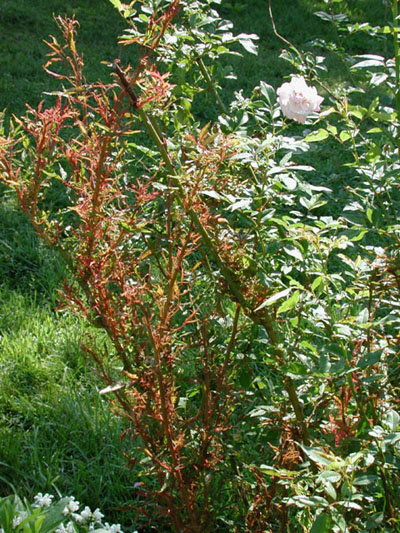
It appears one of my Knockout Roses has Rose Rosette.

Rose Rosette (RRD) is a viral disease of roses that is transmitted by the microscopic eriophyid mite or by grafting. This disease was first described in the early 1940s and it has emerged as one of the most devastating diseases of roses … one with no known cure.

Details

  • Common on the wild multiflora rose which was introduced in 1866 as root stock
  • Most rose species and cultivars are susceptible
  • Infected rose plants often die within a few years
  • Roses are the only plants known to be susceptible to this disease
  • Can spread to other roses

Symptoms

  • Witches’ brooms or clustering of small branches
  • Small distorted leaf growth
  • Leaf reddening
  • Excessive thorn production (Unusually soft and pliable red or green thorns)
  • Thickened stems
  • Rapid stem elongation

What To Do About It

  • Get a diagnosis from your country extension agent (Purdue office in Danville, IN, call 317.745.9260).
  • Dig the bush and remove all roots.
  • Dispose of bush (Burn if you can burn in your area, if not, double bag and throw in trash.)

My Rose

Our growing season has been so different from anything we experienced–started out with very early spring, then to moved to frost damage and now we are dealing with drought. So, it took me a while before I realized what was going on.

Today we took a section of our diseased rose to our County Extension Agent. If you live in my area I would highly suggest you take advantage of the wonderful resource we have in Danville. The facilities are brand new and the very capable staff is eager to help.

Now we wait for a full report due back next week. We hope it is not RRD but we’ll soon know for sure. I’ll keep you posted.

More Information

  • Blog Talk Radio Show with Plant Pathologist, Kassie Conner (Click here.)
  • American Rose Society Report (Click here.)
  • Dee Nash’s article on Red Dirt Rambling (Click here.)

Bloom Thyme Friday: Daylilies and Drought

Today when I walked out into my garden I was struck by how sick many of the daylilies look. Daylilies can usually take the heat but we are now into our 8th week of drought.

I really like daylilies but I LOVE roses and tomatoes, so all of the water we have to spare is dedicated to the favored ones –lucky are the daylilies and other companions that live close to the roses and tomatoes.

 …. These guys are not so lucky and are in need of some serious help!

Today I cut back all the brown, shaped them, gave them a strong dose of MooPoo Tea and hope they are on their way to health again but nothing replaces rain!

Hoping for a restart….


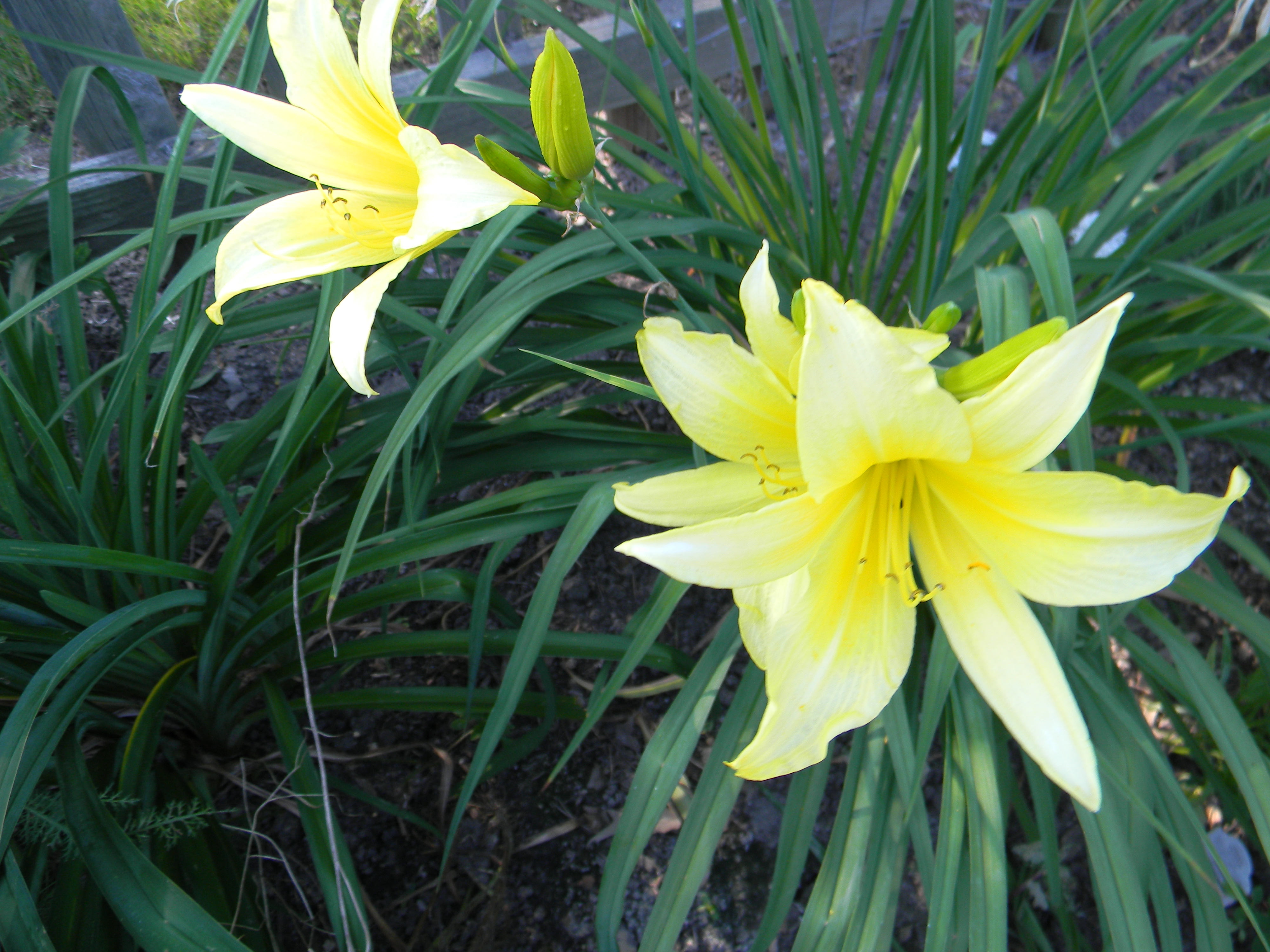
Here are some of the daylilies earlier in the season…

How are things in your garden today? Are you getting any rain?

Bloom Thyme Friday: It’s A Wonder

I don’t know about your grocery store, but many of our grocery stores have potted plants for sale. One that does it best is Kroger. They seem to pick all of my favorites and place them right by the door so I won’t miss them. This year I avoided gorgeous lavender plants, tall, fragrant phlox, a stunning butterfly bush or two, and others … But, the one I just couldn’t pass up was the Carefree Wonder rose. It was in full bloom, had a sweet fragrance and promised disease resistance and even shade tolerance. What rose gardener could pass that one by! Actually, I did pass it by but when I mentioned it to Mr. G, he turned around and went back and bought it for me. Who wouldn’t love a man like that!

Carefree Wonder … being wonderful!

As soon as I planted it, we went into drought mode. Actually I don’t think it has rained since I planted it. And, it is planted in an area I don’t water very often.

Today it became my favorite rose (for now) when I walked by it and it had 2 beautiful blooms. What a trooper!

Here are the facts about Carefree Wonder….

  • USDA zone 4b through 9b
  • Shade tolerant
  • Very disease resistant
  • Pink blend
  • Mild fragrance
  • Blooms in waves throughout the summer.
  • Remove spent blooms to encourage re-bloom.
  • Small wonders.

Next year it will be a show stopper I am sure! Do you grow this rose? Any tips?

Indianapolis Rose Society Garden Tour

The Indianapolis Rose Society July meeting was held at members Nick and Annie’s lovely garden. Mother Nature was kind to us and provided a nice breeze to go along with the sweltering heat. There was even a threat of rain that we were all hoping and praying would come… but so far, it has blown over. 🙁  I think Indiana clouds have forgotten how to rain.

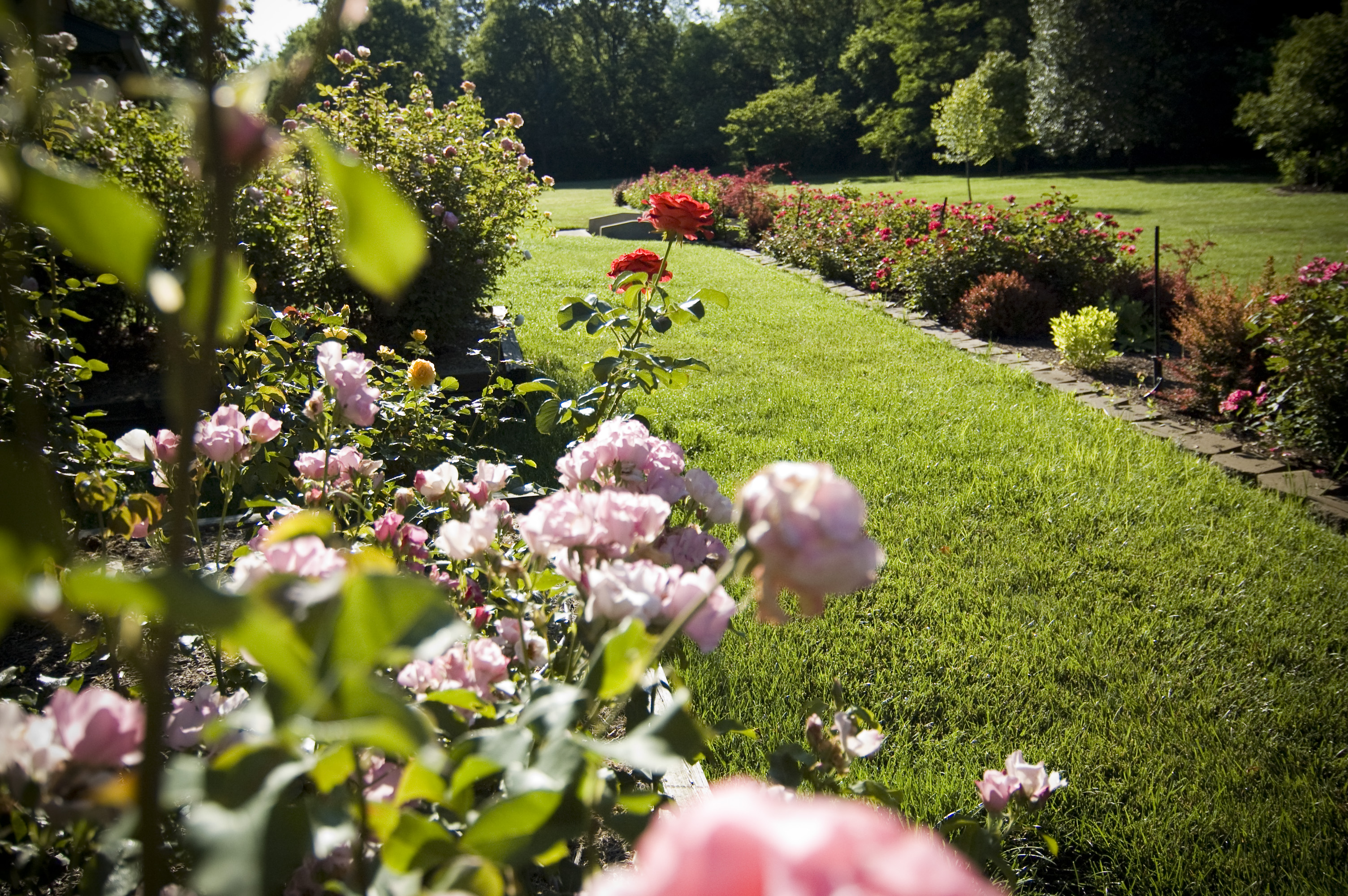
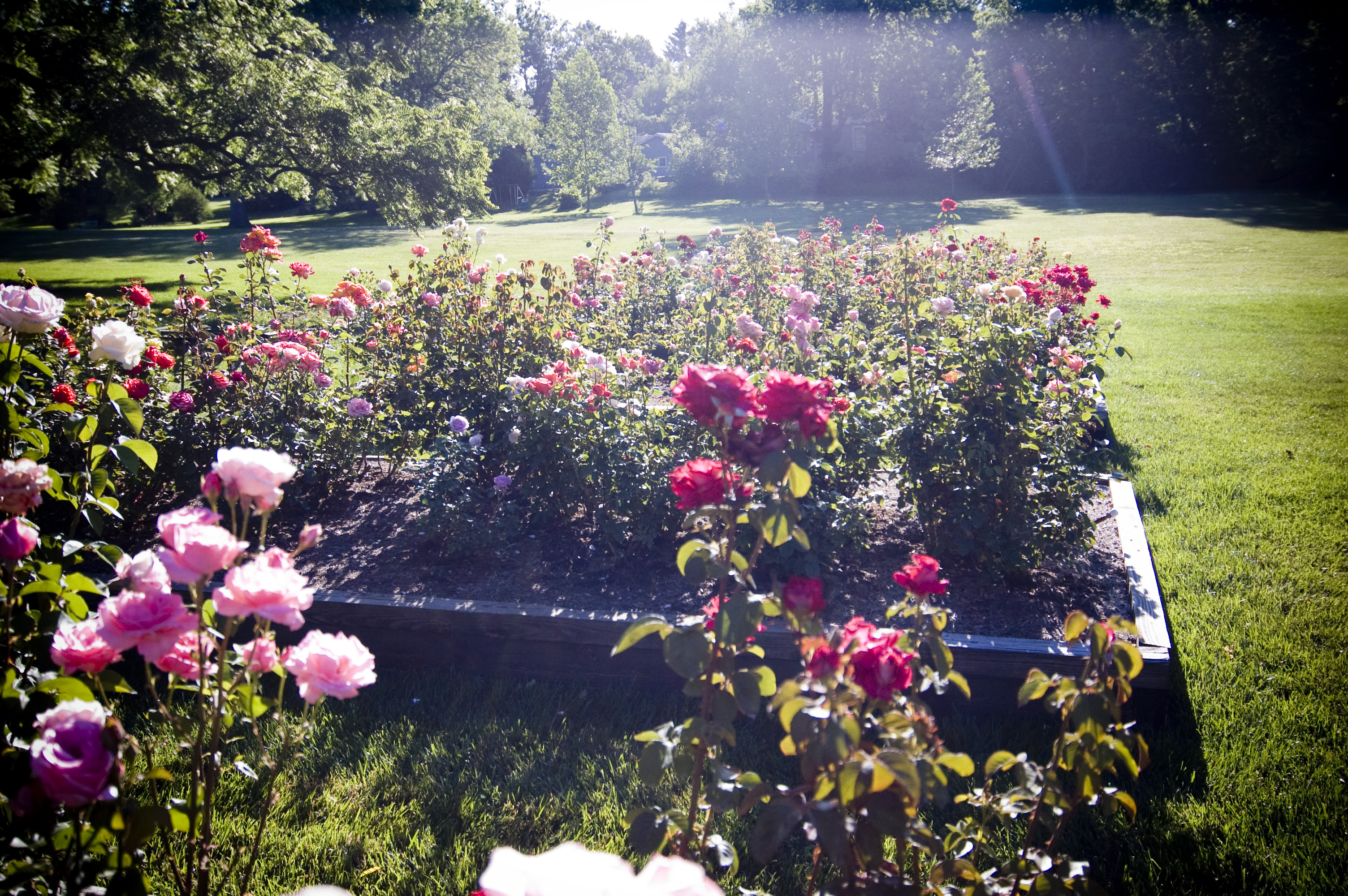
Back to the garden… This lovely garden has more than 500 roses as well as beautiful perennial beds to wind through. If you didn’t have the “rose bug” before going to Nick and Annie’s garden, you surely would catch it there!

When you look at the pictures just remember that they were taken in July during the worse drought on record. Can you imagine how amazing spring would be there? I saw some pictures that were taken this spring and it truly was a rose fairyland.

Are you ready to see some pictures? Here you go…. enjoy!

If you click on the first picture, it will open up a gallery feature for better viewing…

These  pictures were from their spring bloom season…